Research notes
Field notes for AEC software work.
Essays on BIM handoffs, IFC-SG preparation, Revit-safe workflows, and the practical details that decide whether software helps a project team.
Featured
Product UpdatesAutodeskADN
The trust stack under Revit add-ins
Where add-in reliability actually comes from.
Adib Zailan
March 15, 20267 min read
Field NotesCORENET XIFC-SG
Presence is not correctness
A populated parameter can still fail rule context.
Adib Zailan
March 14, 20268 min read
Field NotesCORENET XIFC-SG
The invoice misses the loop
Visible price is not operating cost.
Adib Zailan
February 27, 20268 min read
Technical InsightsCORENET XValidation
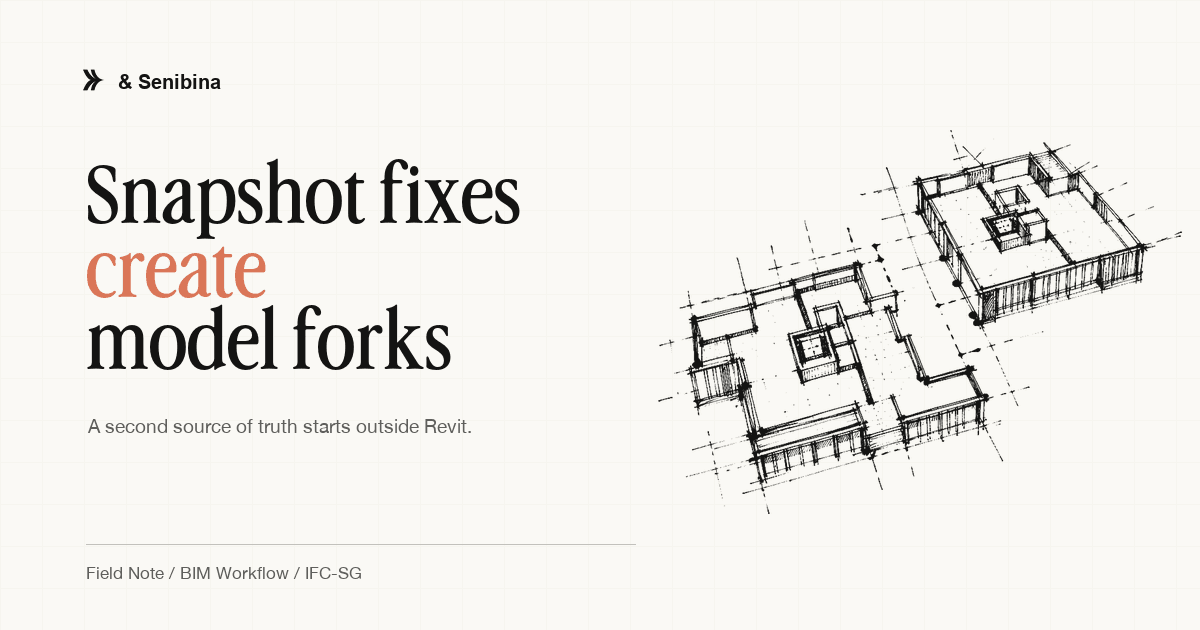
Snapshot fixes create model forks
A second source of truth starts outside Revit.
Adib Zailan
February 22, 20268 min read
Technical InsightsCORENET XIFC
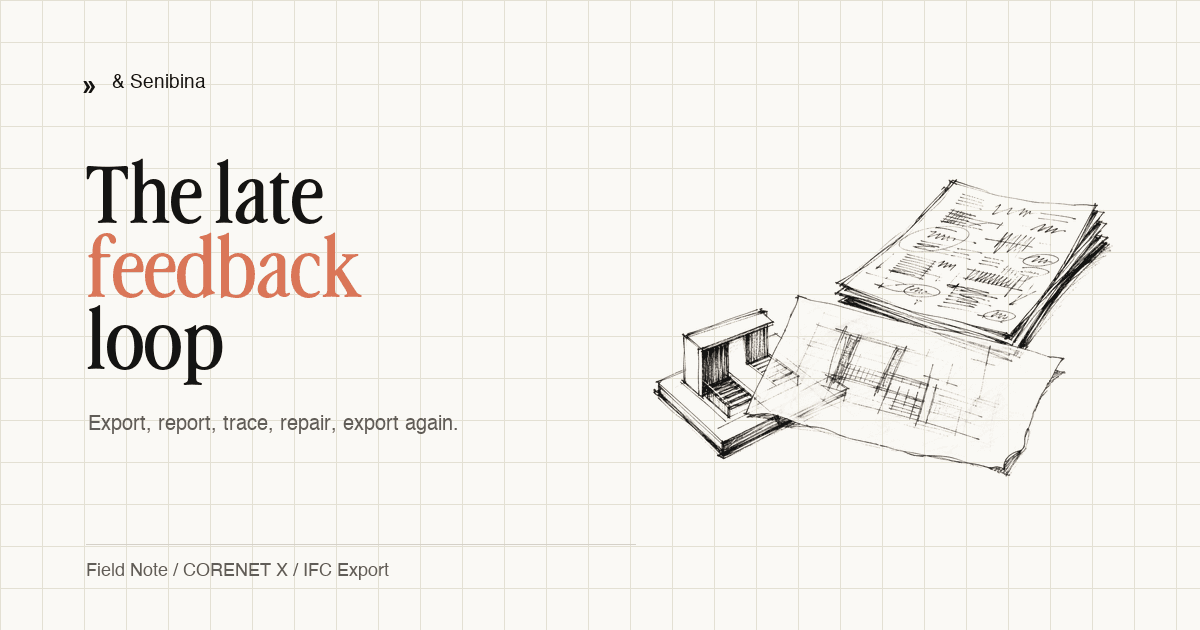
The late feedback loop
Export, report, trace, repair, export again.
Adib Zailan
February 20, 20269 min read
Technical InsightsBIMCompliance
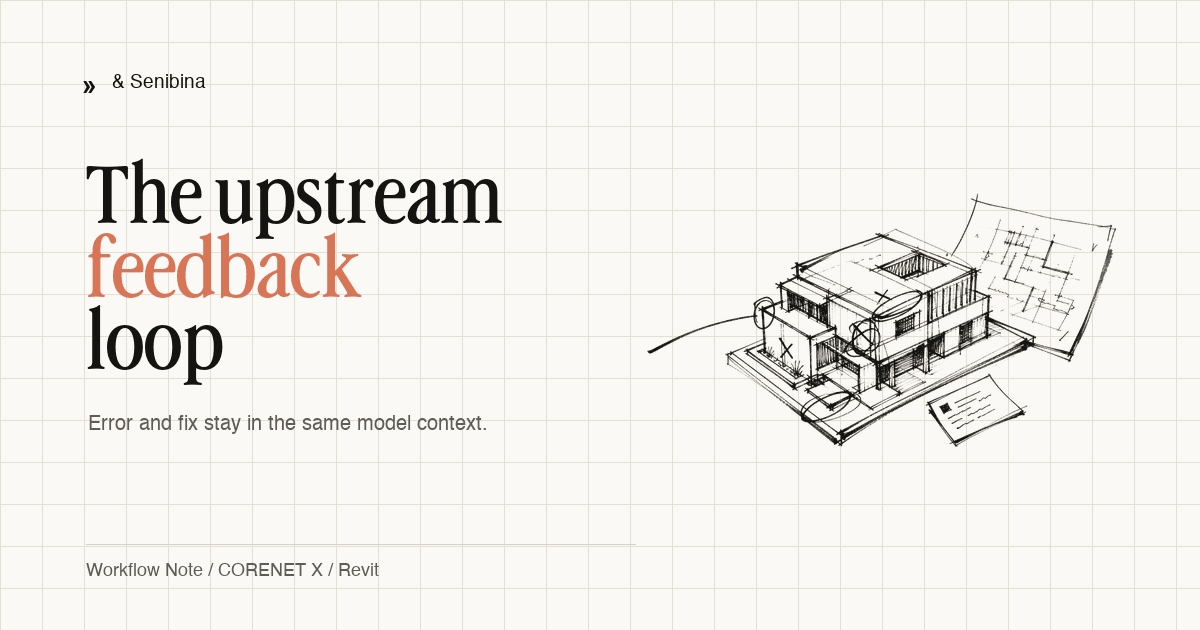
The upstream feedback loop
Error and fix stay in the same model context.
Adib Zailan
February 20, 202610 min read
Technical InsightsBIMCompliance
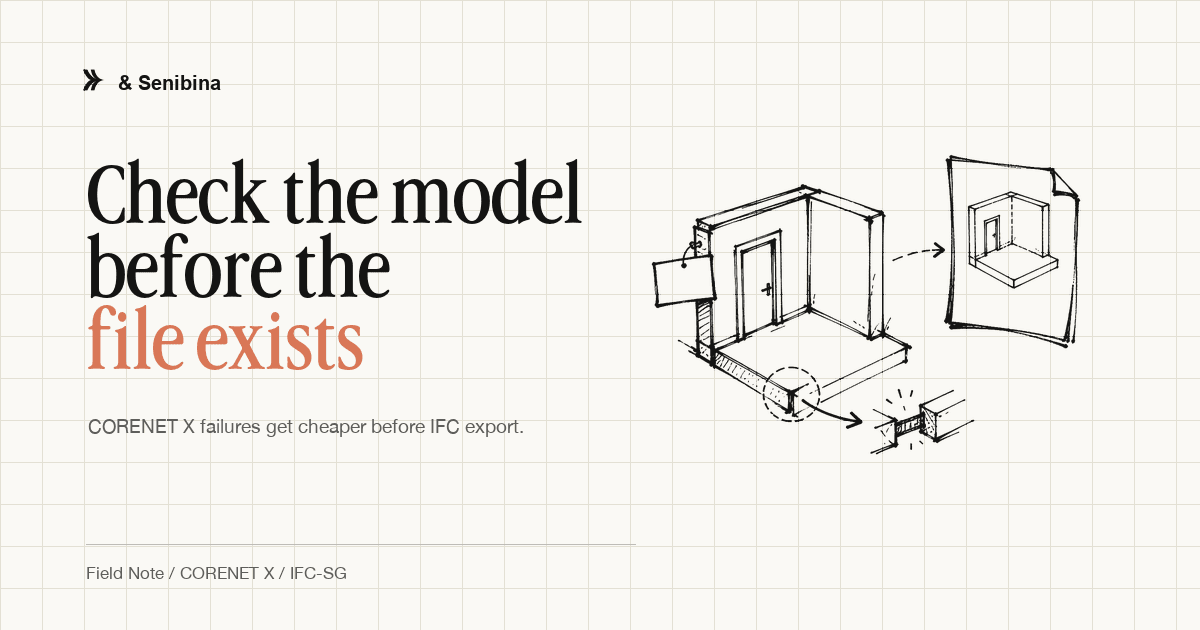
Check the model before the file exists
CORENET X failures get cheaper before IFC export.
Adib Zailan
February 12, 20265 min read
Technical InsightsBIMCompliance
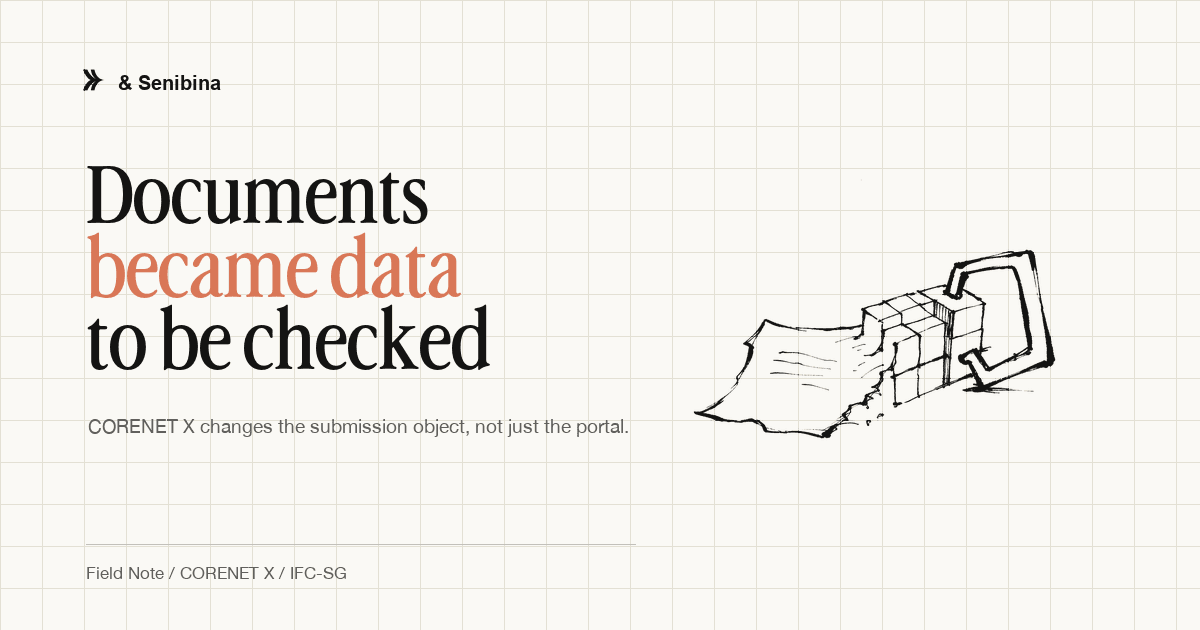
Documents became data to be checked
CORENET X changes the submission object, not just the portal.
Adib Zailan
December 25, 20255 min read
Tips & TricksBIMRevit
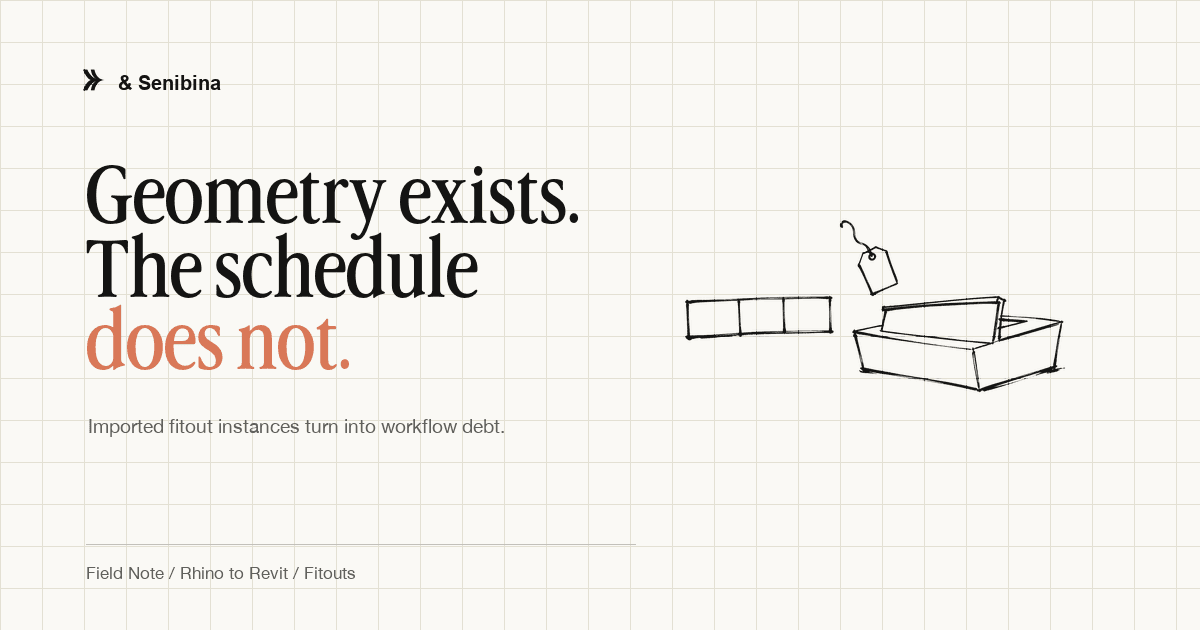
Geometry exists. The schedule does not.
Imported fitout instances turn into workflow debt.
Adib Zailan
December 9, 20255 min read
Featured
Tips & TricksSingaporeCompliance
Eight hours lost to spreadsheet hunting
Five diagnostics that cut mapping time by 90%
Adib Zailan
November 17, 20255 min read
Technical InsightsBIMRevit
Beautiful shells, unbuildable reality
When manual imports compound bad geometry
Adib Zailan
November 10, 20255 min read
Technical InsightsBIMRevit
Export, import, fail:The wrong type persists
Programmatic workflows fix what manual imports break
Adib Zailan
November 7, 20255 min read
Page 1 of 2Next